Behind the Build
How We Run 5 Stages at Once: Inside Next Fest at the LA County Fair
Five stages, one fairgrounds, zero dead air. Here's how the largest indie music festival in the country actually gets built.
July 14, 2026 · 6 min read
We've spent four seasons producing at Fairplex in Pomona. Here's what organizers should know before load-in day one.
Harmony Production Team
Audio, lighting, video and staging crews building Southern California's largest public events.
Quick summary
We've spent four seasons producing at Fairplex in Pomona. Here's what organizers should know before load-in day one.
Fairplex in Pomona is one of the most capable event campuses in Southern California, and one of the easiest to underestimate. It's not a venue in the usual sense — it's a multi-venue property with exhibition halls, outdoor grounds, an arena, and open acreage, home of the LA County Fair and host to everything from music festivals to a FIFA World Cup 2026 Fan Zone.
Scale, first. There are very few places in the region where you can run several major activations at once without them colliding. Second, infrastructure: real power services, real vehicle access, and staff who work large events as their normal business. Third, flexibility — the same campus can host a three-week fair, a five-stage festival, and a corporate build in the same season.
Distance. The campus is big enough that walking between zones is a genuine time cost, and moving gear between them is a logistics decision, not an errand. Crews that plan a load-in as though everything is fifty feet from the truck lose hours on day one.
Coordination is the second surprise. On a campus this size you're rarely the only thing happening. Load-in routes, gate access, and equipment staging all get negotiated with campus operations and whatever else is on the calendar. That's manageable — but only if it's planned, not discovered.
At Fairplex, the site plan is the schedule. Distance is time, and time is labor.
Fairgrounds power is generous compared to a park, but it isn't uniform. Available service varies by zone, and the gap between where power lives and where your stage lives can mean long feeder runs across ground that guests and vehicles also use. We plan distribution and cable protection early, and we bring generator capacity when the math is close rather than betting on it.
Rigging outdoors means ground-supported structure and wind ratings, with engineering documentation where the build requires it. Indoor halls have their own rigging capacities worth confirming before a design is finalized rather than after.
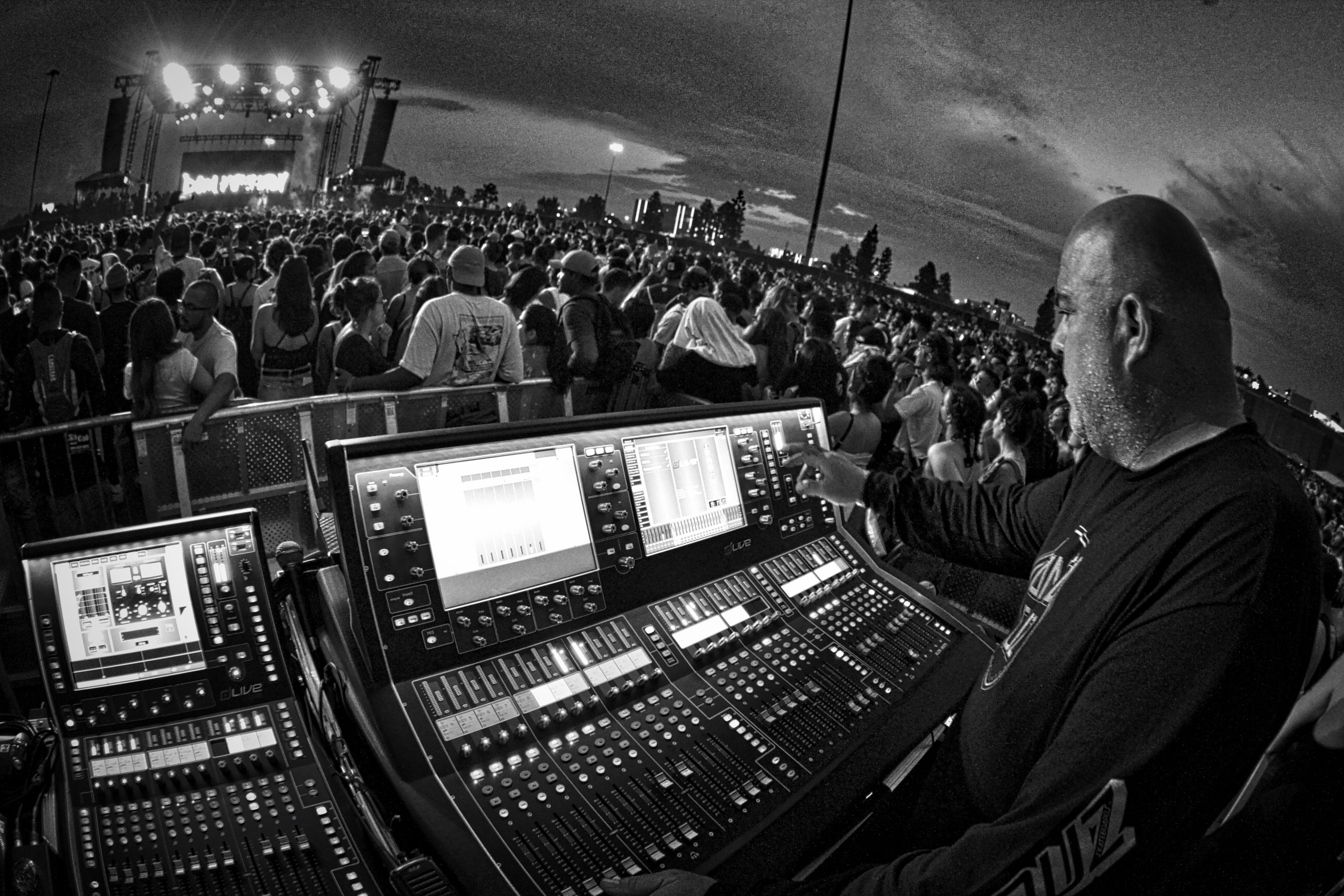
Running several activations at once across the campus is where experience compounds. Unified comms, a single production command, and staged equipment caches near each zone turn a sprawling footprint into something a crew can actually operate. Trying to run it out of one central point costs you the whole day in transit.
Four seasons at Fairplex means we already know the routes, the services, the afternoon wind, and who inside campus operations can unlock what. That knowledge doesn't show up as a line item on a quote, but it shows up on show day as problems that never reach the organizer.
Why trust us
Harmony Event Productions builds audio, lighting, video, staging and power for fairs, festivals, fan zones and municipal events across Southern California. Everything in the Log comes from productions we crewed ourselves.
Five stages, one fairgrounds, zero dead air. Here's how the largest indie music festival in the country actually gets built.
July 14, 2026 · 6 min read
The honest answer to the first question every organizer asks — and the line items that actually move the number.
June 2, 2026 · 7 min read
Stage size isn't about the performers — it's about the last row. A practical sizing guide.
April 21, 2026 · 6 min read