Behind the Build
How We Run 5 Stages at Once: Inside Next Fest at the LA County Fair
Five stages, one fairgrounds, zero dead air. Here's how the largest indie music festival in the country actually gets built.
July 14, 2026 · 6 min read
Stage size isn't about the performers — it's about the last row. A practical sizing guide.
Harmony Production Team
Audio, lighting, video and staging crews building Southern California's largest public events.
Quick summary
Stage size isn't about the performers — it's about the last row. A practical sizing guide.
Organizers usually size a stage around the act: how many musicians, how much backline. That's half the question. The other half — the half that determines whether the event feels good — is the audience. Stage size is really a sightline problem, and the person who decides it is standing in the last row.
These are working starting points, not rules. Every one of them moves based on site conditions.
On flat ground, everyone behind roughly the fifth row is looking at the back of someone's head. Height fixes that. A small indoor or seated event can work at 2 feet. A few hundred standing guests on flat ground want 3 to 4 feet. A thousand-plus wants 4 to 5 feet, and festival main stages commonly sit at 5 to 6 feet or higher.
Go too high and you lose intimacy and add ramp, rail, and access requirements. Go too low and you've built an expensive platform most of your audience can't see.
Three things drive a roof structure. Weather — any outdoor event with electronics and a multi-day build needs cover, and wind rating is part of the engineering, not an accessory. Lighting trim — without structure overhead, there's nowhere to hang a rig, which caps what the show can look like. And daylight — a canopy improves contrast for LED and screens that would otherwise wash out.
A well-placed screen can let you build a smaller stage. If the far half of the crowd is watching the wall anyway, spending budget on additional deck square footage buys less than spending it on IMAG. This trade is worth running deliberately at around a thousand guests and up, and it often produces a better event for the same money.
Past a certain crowd size you're not building a stage for the audience. You're building it for the cameras that serve the audience.
Bring us your site and your crowd number and we'll size it properly — including the parts of the answer that aren't the stage.
Why trust us
Harmony Event Productions builds audio, lighting, video, staging and power for fairs, festivals, fan zones and municipal events across Southern California. Everything in the Log comes from productions we crewed ourselves.
Five stages, one fairgrounds, zero dead air. Here's how the largest indie music festival in the country actually gets built.
July 14, 2026 · 6 min read
The honest answer to the first question every organizer asks — and the line items that actually move the number.
June 2, 2026 · 7 min read
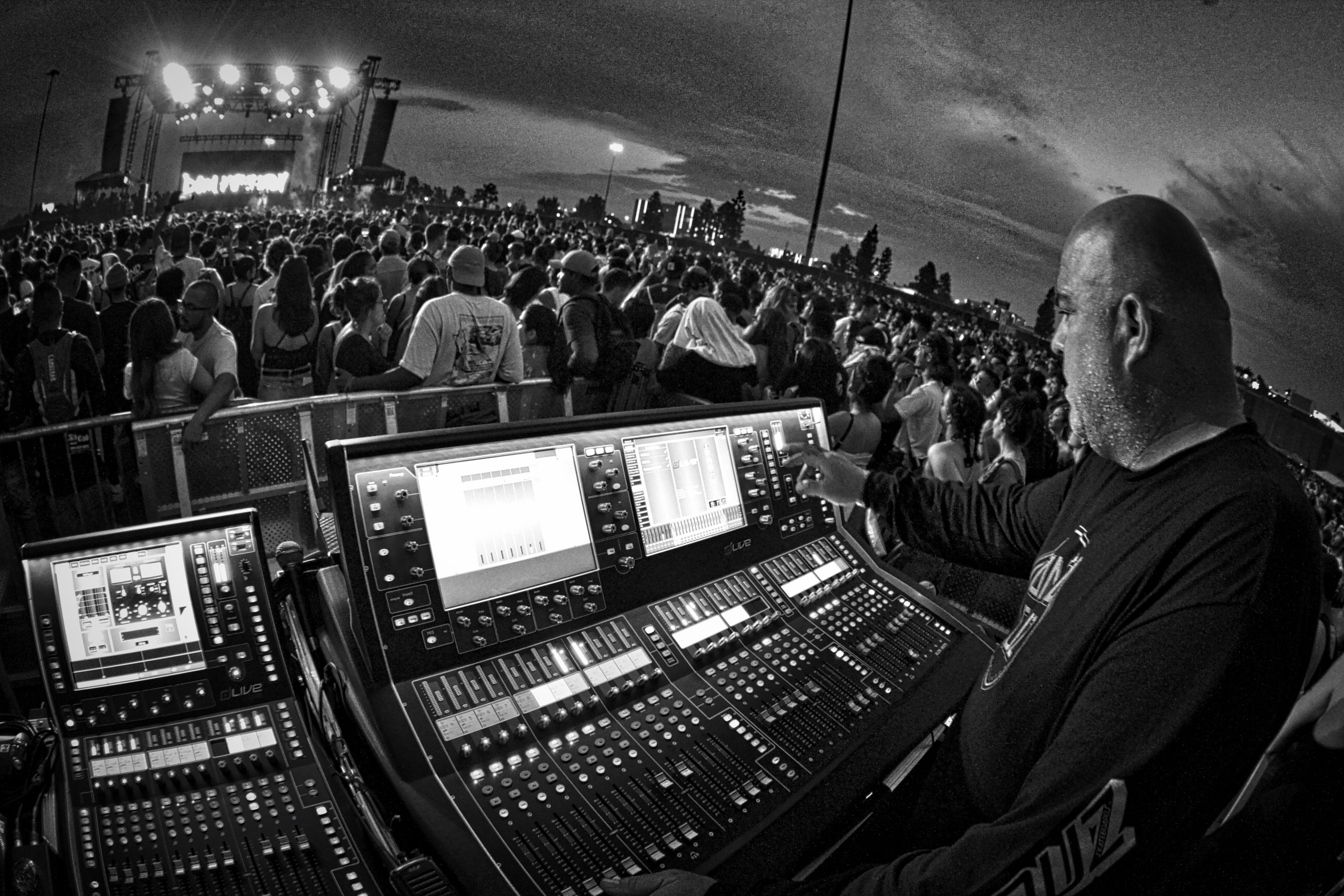
We've spent four seasons producing at Fairplex in Pomona. Here's what organizers should know before load-in day one.
March 5, 2026 · 5 min read