Organizer Guides
What Does Event Production Actually Cost? A 2026 Breakdown
The honest answer to the first question every organizer asks — and the line items that actually move the number.
June 2, 2026 · 7 min read
Five stages, one fairgrounds, zero dead air. Here's how the largest indie music festival in the country actually gets built.
Harmony Production Team
Audio, lighting, video and staging crews building Southern California's largest public events.
Quick summary
Five stages, one fairgrounds, zero dead air. Here's how the largest indie music festival in the country actually gets built.
Next Fest is the largest indie music festival in the country, and it happens inside another enormous event — the LA County Fair at Fairplex in Pomona. That nesting is the whole story. We aren't building a festival on an empty field. We're building five simultaneous stages inside a fairgrounds that already moves more than a million guests a year, with rides running, food halls open, and fair programming continuing on its own schedule.
One stage is a production. Five stages running at the same time is a system. Every decision compounds: five sets of doors, five load-in windows, five changeover clocks, five sound fields overlapping in open air, and one power infrastructure feeding all of it. If any single stage falls behind, the crowd flow across the entire site distorts, and the stages nobody was worried about suddenly have problems.
So we stopped treating them as five events years ago. We plan Next Fest as one production with five delivery points.
The structure is simple and it holds under pressure. A single production command owns the master timeline and the site-wide picture. Each stage gets its own crew with a stage lead who owns everything inside that footprint — audio, lighting, changeovers, artist contact. Comms are unified: every stage lead is on the same channel as command, with a separate channel per stage for internal traffic so routine chatter never buries a real issue.
The reason this matters is decision speed. When a band lands late or a generator throws a fault, we don't want a committee. We want one person with authority at the stage, one person with authority over the site, and a clear line between them.
Sound bleed is the question every festival organizer asks and the one that separates experienced production from optimistic production. There is no single trick. It's a stack of decisions made early: stage orientation so that no PA is aimed directly into another stage's audience, directional line arrays with controlled rear rejection, cardioid subwoofer configurations to keep low end from wandering, and SPL zoning so each stage has a defined budget rather than an arms race.
Then there's scheduling. Even with perfect physics, two loud headline sets facing the same corridor at the same minute will interfere. Programming and production have to talk to each other. At Next Fest, we build the audio plan and the run-of-show together, not in sequence.
Sound bleed isn't solved at soundcheck. It's solved on the site plan, weeks earlier.
Multi-act lineups live and die on changeovers. With a dozen or more acts per stage per day, a consistent six or eight minutes of slippage becomes an hour by the evening, and that hour comes out of the headliner or out of the curfew. Neither is acceptable.
Our approach is unromantic. Rolling risers and pre-patched inputs so the next act's backline is staged before the current act finishes. Labeled, repeatable input lists. Monitor engineers who build the next set's mixes during the current one. A stage lead calling the clock out loud, every time. When changeover becomes muscle memory, the schedule stops being a source of stress and starts being a tool.
Nobody compliments your distro plan. They only notice it when it fails, and when it fails at a festival it fails publicly. We calculate the full production load per stage with real headroom rather than nameplate optimism, separate audio from lighting and motors where it matters, and build redundancy into the paths that would end a show if they dropped.
Cable runs get planned around crowd routes and vehicle paths on day one, because a fairgrounds is a working site with forklifts, food trucks, and guests moving through the same ground your feeders are crossing.
Venue familiarity is an underrated form of risk reduction. After four seasons at Fairplex, we know where the reliable services are, which distances eat an hour of your load-in, how the wind behaves in the afternoon, and who to call inside campus operations when something needs to move. First-time vendors spend their first year learning that. We spend ours improving.
Any competent shop can deliver one great stage. Five at once tests planning discipline, crew depth, comms structure, and the willingness to over-engineer the boring parts. If you're evaluating a production partner for a festival, ask them how they'd run five stages — then listen for whether they talk about gear or about systems.
Why trust us
Harmony Event Productions builds audio, lighting, video, staging and power for fairs, festivals, fan zones and municipal events across Southern California. Everything in the Log comes from productions we crewed ourselves.
The honest answer to the first question every organizer asks — and the line items that actually move the number.
June 2, 2026 · 7 min read
Stage size isn't about the performers — it's about the last row. A practical sizing guide.
April 21, 2026 · 6 min read
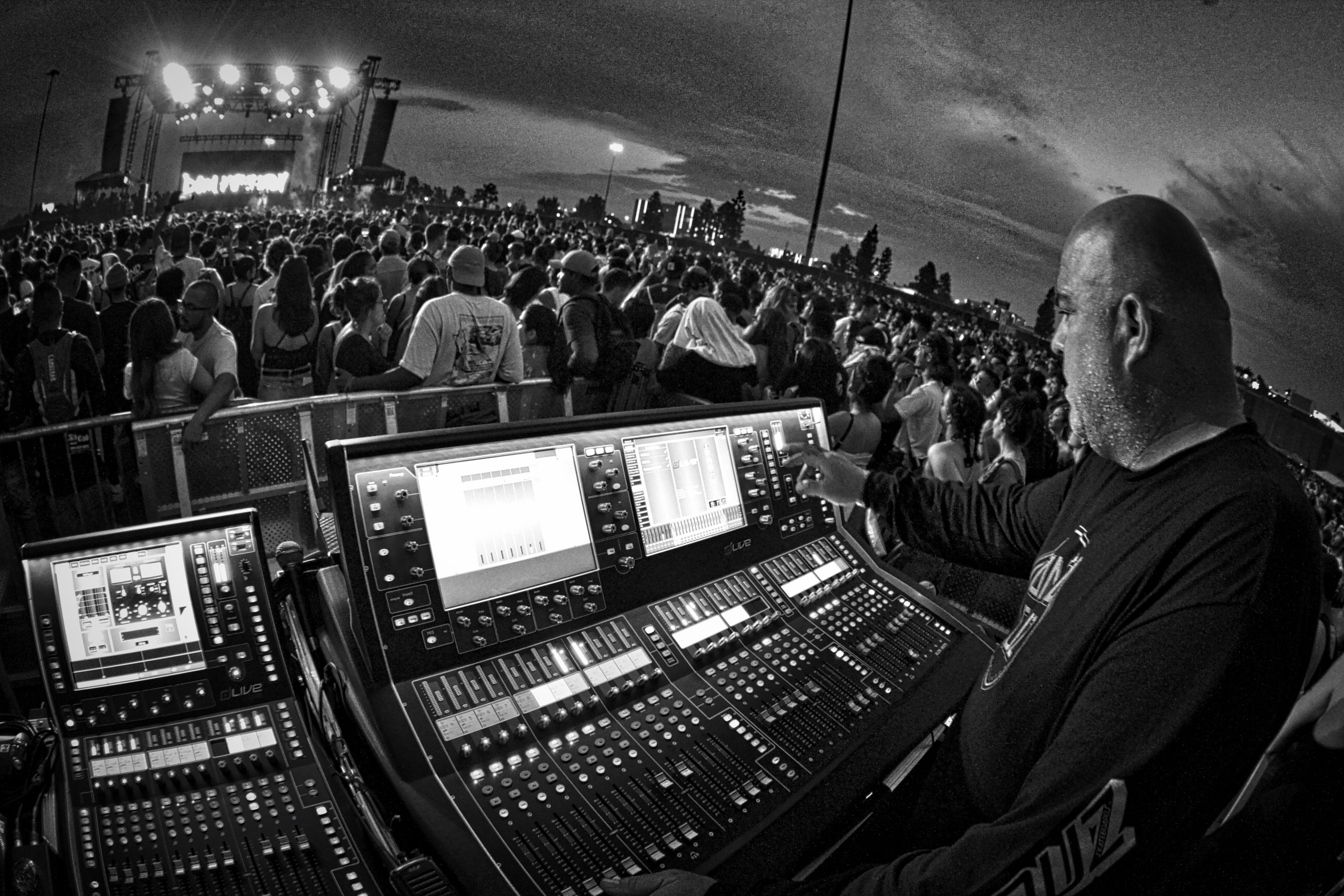
We've spent four seasons producing at Fairplex in Pomona. Here's what organizers should know before load-in day one.
March 5, 2026 · 5 min read